
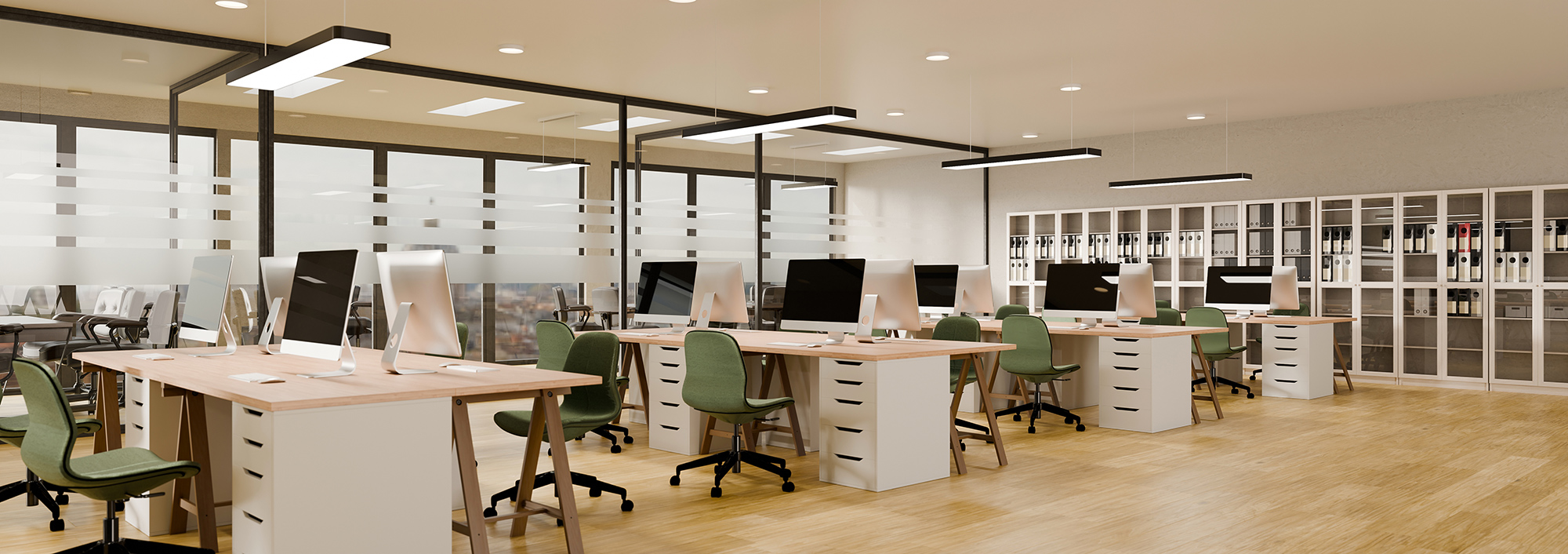
The world of commercial interior fit-outs has reached a definitive “reset” point in 2026. After years of reactive changes and experimental “hybrid” tweaks, businesses have arrived at a mature conclusion: the office must earn the commute. We are no longer designing for attendance; we are designing for value. In 2026, the “Flight to Quality” is the primary driver, as companies trade larger, uninspiring square footage for smaller, premium, and highly efficient spaces.
Grade B to Grade A: The Refurbishment Surge
With the supply of new-build Grade A office space limited in major UK cities like London, Manchester, and Leeds, 2026 has become the year of the “Super-Refurb.” Landlords and tenants are increasingly opting to retrofit existing Grade B stock, transforming them into high-performance environments that meet modern ESG (Environmental, Social, and Governance) standards.
These fit-outs aren’t just aesthetic; they are structural. A typical 2026 refurbishment often includes:
- Zoned HVAC Systems: Moving away from building-wide climate control to localized, sensor-driven air quality and temperature management.
- Smart-Ready Infrastructure: Embedding IoT sensors into the ceiling and floors to track real-time occupancy and energy usage.
- Acoustic Excellence: Treating sound as a key performance metric—comparable to lighting—through the use of acoustic glass, felt ceiling grids, and “library-grade” quiet zones.
The Rise of Cat A+ (Plug-and-Play)
The traditional boundary between a landlord’s shell (Cat A) and a tenant’s personalization (Cat B) has blurred. In 2026, Cat A+ (or “Plug-and-Play”) is the most sought-after fit-out model. Startups and established firms alike are looking for spaces that are ready for immediate occupation, complete with kitchens, meeting rooms, and high-speed Wi-Fi, while still allowing for light-touch branding. This model reduces the “time-to-desk” and significantly lowers the upfront capital expenditure for tenants, making it a win-win for flexible leasing.
Designing for Performance, Not Presence
In 2026, the “desk farm” is officially dead. The modern fit-out is divided into Activity Zones:
- Concentration Pods: Soundproofed, individual spaces for deep focus.
- Collaboration Hubs: Open, tech-enabled areas designed for “planned collisions” and brainstorming.
- The Social Anchor: High-spec canteen or lounge areas that encourage culture-building and mentoring—features that a home office simply cannot replicate.
Circularity and “Urban Mining”
Sustainability in 2026 has moved beyond a “nice-to-have” checklist. Driven by the Circular Economy mindset, fit-out contractors are now practicing “Urban Mining”—the art of salvaging and repurposing materials already within the building or local community. Whether it’s refinishing original timber floors or repurposing glass partitions from a previous tenant, the goal is to reduce embodied carbon. Circularity is now a procurement requirement, and businesses are increasingly demanding Digital Product Passports for their furniture and materials to prove their low-carbon credentials.
Conclusion: The Office as an Asset
A commercial fit-out in 2026 is no longer viewed as a sunk cost; it is a strategic asset. By focusing on quality, flexibility, and human-centric design, businesses are creating environments that don’t just host their staff, but actively support their health, creativity, and brand identity. In the competitive landscape of 2026, the best workplace isn’t the one with the most desks—it’s the one with the most purpose.